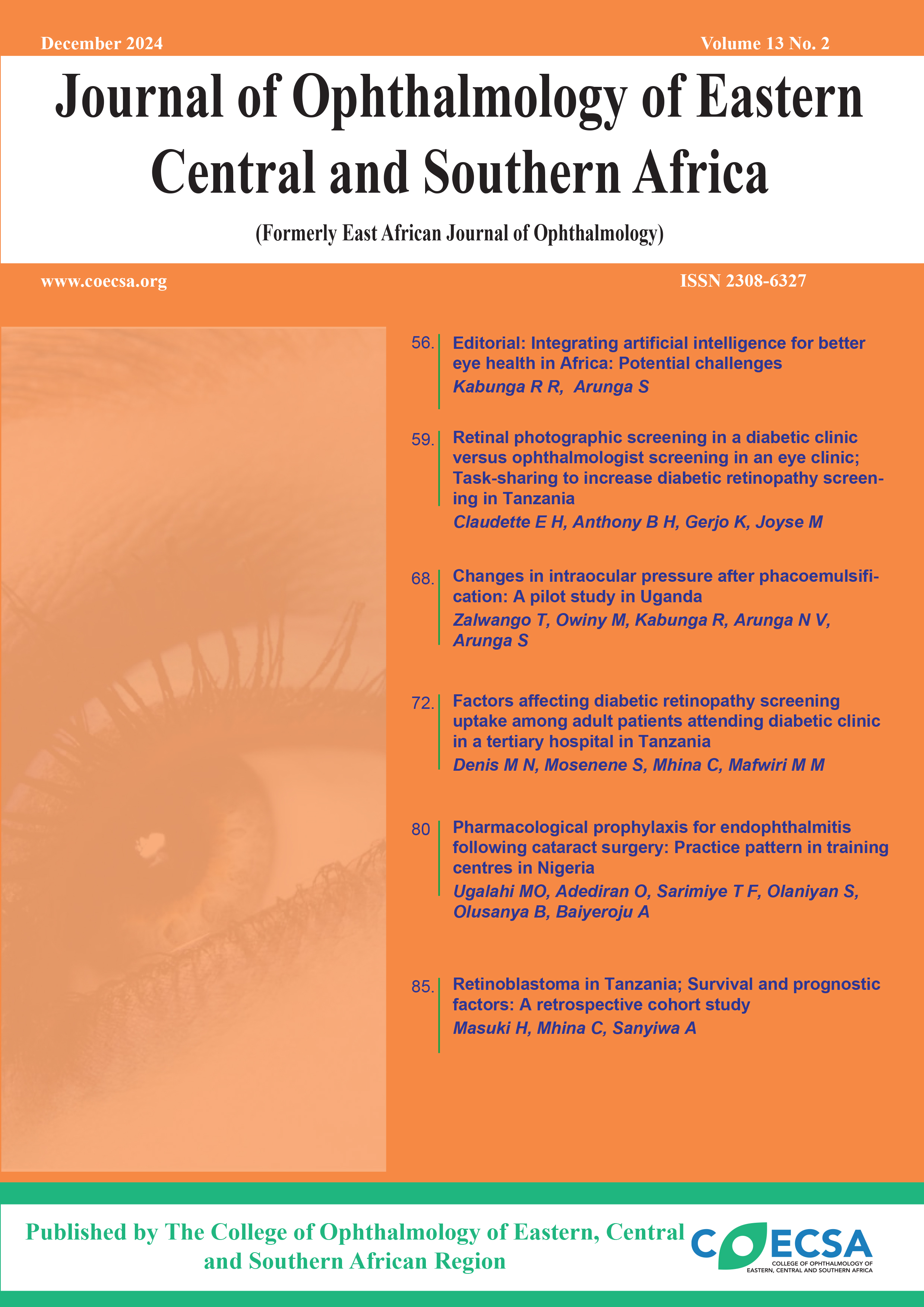
Pharmacological prophylaxis for endophthalmitis following cataract surgery: Practice pattern in training centres in Nigeria
DOI:
https://doi.org/10.64666/joecsa.2024.68Keywords:
Pharmacological prophylaxis, Endophthalmitis, Cataract surgery, Practice pattern, NigeriaAbstract
Background: Post-operative infective endophthalmitis is often caused by normal ocular flora. This informed the practice of pharmacological and non-pharmacological preventive measures such as using ocular sterilising agents and antibiotics.
Objective: This study aimed to determine the practice pattern for pharmacological prophylaxis against post- cataract surgery endophthalmitis in postgraduate ophthalmology training centres in Nigeria.
Methods: An online self-administered questionnaire was sent to consenting ophthalmologists who were key informants purposively selected from accredited ophthalmology training centres across Nigeria. Data was analysed using the IBM SPSS Statistics for Windows, version 26 (IBM Corp., Armonk, N.Y., USA). Information obtained included perioperative antibiotic use, intraoperative antibiotic use, and povidone-iodine use at surgery.
Results: A total of 39 training centres were recruited, of which 35 responded. Only one (2.9%) centre had a written endophthalmitis prophylaxis protocol. Fifteen (42.9%) respondents reported the routine use of preoperative topical antibiotics by all surgeons in their centres, while preoperative use of topical antibiotics was surgeon-dependent in the remaining 20 (57.1%) centres. The most common class of preoperative antibiotics in use was fourth-generation quinolones (46.7%). Intraoperative antibiotics routinely used were subconjunctival gentamicin in 34 (97.1%), intracameral antibiotics in 9 (25.7%), and 5% povidone-iodine in 30 (85.7%) centres. Postoperative use of topical antibiotics was routine in all centres.
Conclusion: Pharmacological endophthalmitis prophylaxis in Nigerian training institutions commonly involves the intraoperative use of 5% povidone-iodine and intraoperative antibiotics, in keeping with literature. The use of preoperative and postoperative topical antibiotics, though not strongly backed by evidence, is also common in many centres.
Downloads
Published
How to Cite
Issue
Section
Categories
License
Copyright (c) 2026 Dr.Tarela F. Sarimiye, Dr.Mary O. Ugalahi, Dr.Olusegun Adediran, Dr.Segun Olaniyan, Dr.Bolutife Olusanya, Dr.Aderonke Baiyeroju

This work is licensed under a Creative Commons Attribution 4.0 International License.
JOECSA publishes all content Open Access under the Creative Commons Attribution 4.0 International License (CC BY 4.0). Authors retain copyright. Anyone may share and adapt the work for any purpose, provided appropriate credit is given to the original author(s) and the source. License: https://creativecommons.org/licenses/by/4.0/